
Table of Contents
- Why Artisan Kitchenware Is Worth the Search
- Where to Shop for Handmade Kitchenware Online
- How to Identify Quality Handmade Kitchenware Before You Buy
- Artisan Cutting Boards: What Sets Them Apart
- Budgeting for Artisan Kitchenware: Price vs. Value
- Handcrafted Kitchen Gifts: Choosing Pieces That Last
- Shipping, Returns, and Breakage: What to Check Before You Order
- Conclusion: Building a Kitchen Collection with Meaning
- Frequently Asked Questions
Last Updated: October 9, 2026
Why Artisan Kitchenware Is Worth the Search
Artisan kitchenware is cookware, dinnerware, and kitchen tools made by individual makers or small workshops rather than mass-production factories, and it usually carries the marks of handwork: irregular glaze, visible grain, or a signature on the base. At Lynne's Creations, the difference shows up in the details: a cutting board printed with a design that will not peel, a serving piece that becomes a conversation at the table.

Mass-produced kitchen essentials are engineered for volume. Handcrafted pieces are made in small batches, often by one person working through a single order at a time. That changes the timeline, the price, and the character of what arrives at your door.
Below, we walk through where to shop, how to verify quality before you buy, what to budget, and how to protect yourself on shipping and returns.
Where to Shop for Handmade Kitchenware Online
The best places to buy handmade kitchenware online fall into two groups: specialist artisan marketplaces built around individual makers, and general kitchen retailers that stock a small artisan section. Each has trade-offs worth knowing before you commit.
A Step-by-Step Method for Finding Makers
Most shoppers start by typing a product into a search bar and clicking the first store that appears. That approach surfaces whoever advertises hardest, not whoever makes the best piece. A short, repeatable method works better:
- Start with a material or technique, not a product. Search "hand-thrown stoneware bowl" or "hand-forged carbon steel knife" instead of "ceramic bowl." Technique words filter out factory listings fast.
- Add a maker signal. Terms like "studio pottery," "small batch," "made to order," or "signed base" pull listings where an individual is named.
- Cross-check the maker across platforms. A legitimate artisan usually appears in more than one place, their own shop, a marketplace storefront, and often a social account showing work in progress. A seller that exists only as a single anonymous listing is a red flag.
- Read the maker's own shop before the marketplace listing. The direct shop usually carries fuller material specs, lead times, and care instructions than a marketplace template.
- Save three to five candidates and compare them side by side on material, dimensions, lead time, shipping cost, and return terms before you buy anything.
This method takes about fifteen minutes and replaces the guesswork that comes with browsing category pages.
Specialist Marketplaces vs. General Kitchen Retailers
Specialist marketplaces put thousands of independent sellers in one place, which makes browsing easy and comparison shopping fast. The downside is uneven quality control, since each seller sets their own standards. General kitchen retailers vet their suppliers more heavily, but the artisan selection is usually narrow and skews toward well-known names.
| Where You Shop | Strength | Watch Out For | Best For |
|---|---|---|---|
| Specialist marketplaces | Huge variety, direct maker contact | Uneven quality, variable shipping | Browsing many makers at once |
| General kitchen retailers | Curated, consistent standards | Limited artisan range | Buyers who want less risk |
| Direct-from-artisan shops | Full maker story, custom work | Longer lead times | Custom and personalized pieces |
| Small studio storefronts | One-of-a-kind pieces | Stock disappears fast | Collectors and gift-givers |
How to Tell a Specialist Marketplace From a Dropshipper
A true artisan marketplace shows you the maker: a named profile, a workshop location, a process description, and often photos of the studio. A dropshipper resells a catalog it never touches. The tells are consistent:
- The same product photo appears under multiple seller names.
- The listing has no maker name, only a brand or store handle.
- Shipping estimates are identical across unrelated products.
- The "about" page talks about the company, never about a person or workshop.
If two or more of those apply, treat the listing as mass-produced regardless of how it is labeled.
Direct-from-Artisan Shops and What They Offer
Buying straight from a maker's own shop gives you the clearest picture of who made the piece and how. You often get custom options, since a single artisan can adjust size, finish, or design without navigating a factory schedule.
Direct shops also tend to be the only place you can ask process questions, clay body, glaze chemistry, kiln temperature, wood species, finish type, and get an answer from the person who did the work.
How to Identify Quality Handmade Kitchenware Before You Buy
Quality handmade kitchenware shows up in three places: the product description, the maker's story, and the material specs. Read all three before you add anything to a cart. The sections below turn that reading into a checklist you can run in a few minutes per listing.
A Verification Checklist for Genuinely Handmade Goods
"Handmade" is not a regulated term in product marketing, so the label alone proves nothing. What proves something is a pattern of specific, checkable details. Run each listing against this list:
- Named maker. A person or a named workshop, not just a brand. "Made by [name] in [workshop]" beats "designed in-house."
- Process description. How the piece was formed, hand-thrown, hand-forged, hand-carved, kiln-fired, woven on a floor loom. Vague words like "crafted" or "artisan-style" are not process descriptions.
- Variation disclosure. Honest makers say pieces vary in glaze, grain, or dimension because they are made one at a time. A listing that promises identical units across a large quantity is describing a factory.
- Lead time. Made-to-order items carry a production window. If a listing claims handmade and ships same-day in unlimited quantity, the two claims conflict.
- Material specifics. Clay body, wood species, steel type, fiber content. "Premium materials" is not a material.
- Care instructions. Real makers tell you how to keep the piece alive, hand wash, oil the wood, avoid thermal shock. Absence of care info usually means absence of maker involvement.
- Reverse image check. Run the main product photo through a reverse image search. If it appears on a dozen unrelated stores, it is a stock or dropship image.
Two or three of these signals together are strong. Any single one alone is not.
Reading Product Descriptions and Maker Stories
A trustworthy listing tells you the material, the dimensions, the care instructions, and who made the piece. Vague listings that lean on words like "premium" or "artisan-style" without specifics are a warning sign.
The maker's story is where the useful detail lives. A real workshop page usually mentions how long the maker has worked, what they trained in, what materials they source and from where, and what they refuse to do.
Materials, Durability, and Care Requirements
Material determines how a piece performs and how long it lasts. Tempered glass resists heat and cleans easily. Stainless steel holds up to daily use. Wood and ceramics need more care but age well when treated properly.
"She's Got A Knife!!!" Glass Cutting Board →
- Tempered glass: heat-resistant, easy to clean, hand wash to protect printed designs
- Stainless steel: durable, resists rust, good for drinkware and tools
- Carbon steel: takes and holds a sharp edge, needs drying after washing
- Ceramics: chip-prone at the edges, best hand washed
- Woven textiles: machine washable on gentle cycles, air dry to preserve shape
Match the material to the job. A carbon steel knife is the wrong gift for someone who leaves dishes in the sink overnight. A delicate ceramic serving piece is the wrong choice for a household with young kids.
Artisan Cutting Boards: What Sets Them Apart
Artisan cutting boards differ from mass-market boards in the surface, the design, and how the finish holds up over time. A well-made board is functional enough to use daily and attractive enough to leave out.
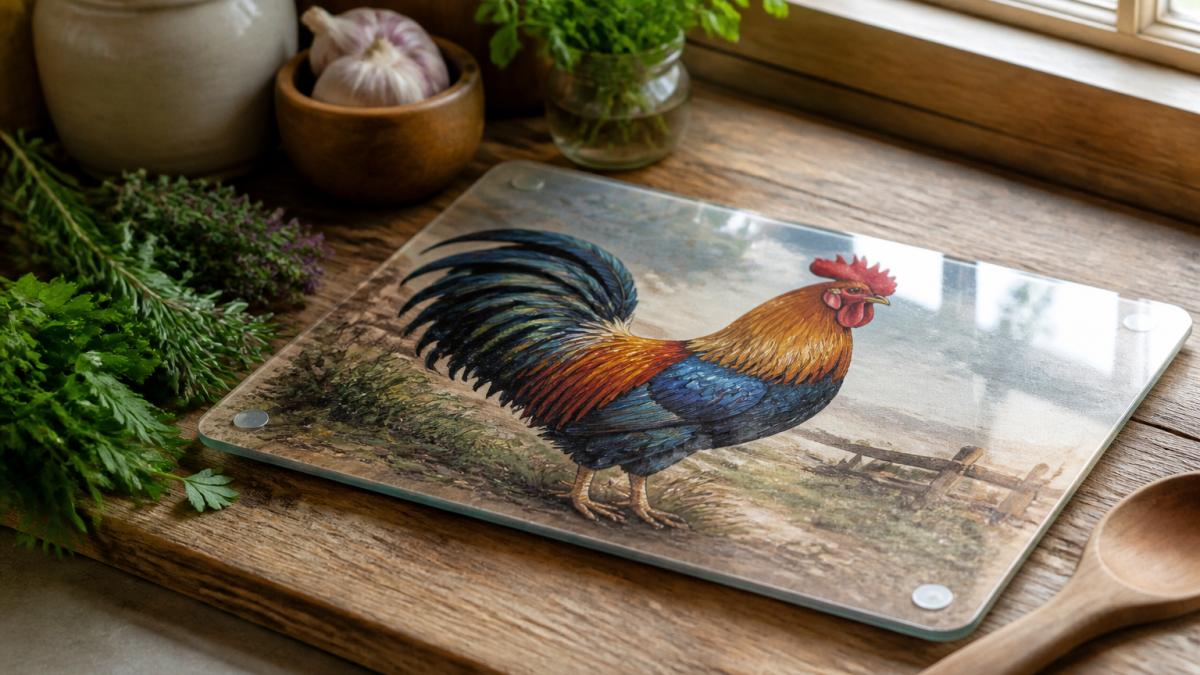
Our glass cutting boards, like the Farmhouse Rooster Glass Cutting Board, use a sublimated full-color design that is fused into the tempered glass surface. That means the print will not fade or peel.
Budgeting for Artisan Kitchenware: Price vs. Value
Artisan kitchenware costs more than mass-produced equivalents because you are paying for the maker's time, not just the material. A hand-finished piece takes hours of labor that a factory line eliminates.
Our glass cutting boards run $15.00 each, which puts them in reach for most gift budgets.

When you budget, factor in shipping. Handmade goods ship from small studios, so costs vary more than they do with large retailers.
Handcrafted Kitchen Gifts: Choosing Pieces That Last
Handcrafted kitchen gifts work best when they match the recipient's actual kitchen habits. A serious cook will use a good board or knife every day. Someone who entertains will reach for serving pieces.
Our Shark Coochie Board and "Kitchen Crimes In Progress" Glass Cutting Board both lean into humor, which makes them easy gifts for housewarmings and birthdays. For a more classic look, the Farmhouse Rooster Glass Cutting Board fits farmhouse and cottage kitchens without feeling gimmicky.

If you are buying for a wedding party or a group, ask the maker about bulk orders before you assume it is not possible.
Shipping, Returns, and Breakage: What to Check Before You Order
Shipping, returns, and breakage policies matter more with handmade goods than with mass retail, because small studios handle each order individually and replacement stock may be limited. Read the policy before you buy, not after something arrives cracked.
- Shipping times: confirm the production window separately from the transit window
- Packaging: ask how fragile items are packed, especially ceramics and glass
- Returns: check whether custom or personalized pieces are returnable
- Breakage: know who pays for a replacement if an item arrives damaged
- International delivery: factor in customs and longer transit for cross-border orders
Conclusion: Building a Kitchen Collection with Meaning
Finding artisan kitchenware online comes down to reading carefully and asking the right questions. Check the material, the maker, the shipping policy, and the return terms before you buy, and you will end up with pieces that last instead of clutter.
When you are ready to add something with character to your kitchen, Lynne's Creations offers handcrafted tumblers, glass cutting boards, and personalized gifts made with care.
Frequently Asked Questions
Where can I buy artisan kitchenware online?
Specialist marketplaces, direct-from-artisan shops, and curated brand stores are the main options. Look for sellers who publish maker stories, list exact materials, and show real product photos rather than stock images. Direct-from-artisan shops often offer customization and let you ask questions before ordering. Brands like Lynne's Creations, for example, sell handcrafted glass cutting boards and personalized kitchenware with transparent product details.
How can I tell if kitchenware is genuinely handmade?
Check for a maker story, process photos, and material specifics. Genuine handmade items usually have slight variations between pieces, which sellers should mention. Look for details like the artisan's name, workshop location, and production method. If a listing uses only generic phrases and stock photos with no process transparency, treat it as mass-produced until proven otherwise. Requesting a custom order or asking about the making process is a quick way to verify authenticity.
Is artisan kitchenware safe to use for food?
Yes, when the maker uses food-safe materials and finishes. For glass cutting boards, tempered glass is non-porous and easy to clean. For wood or ceramic pieces, check that the seller states food-safe sealants or glazes. Hand wash most artisan items to preserve designs and finishes. If a listing does not specify food safety, ask the seller directly before purchasing. Reputable makers will confirm the materials and recommended care.
What should I look for when buying handmade kitchenware online as a gift?
Prioritize pieces that are gift-ready and durable. Look for items with personalization options, protective packaging, and clear care instructions. Handcrafted kitchen gifts like custom cutting boards or personalized tumblers work well because they feel personal and useful. Check shipping times early, especially for weddings or anniversaries, and confirm the seller offers tracking. Reading product reviews and asking about return policies also helps you avoid surprises.